
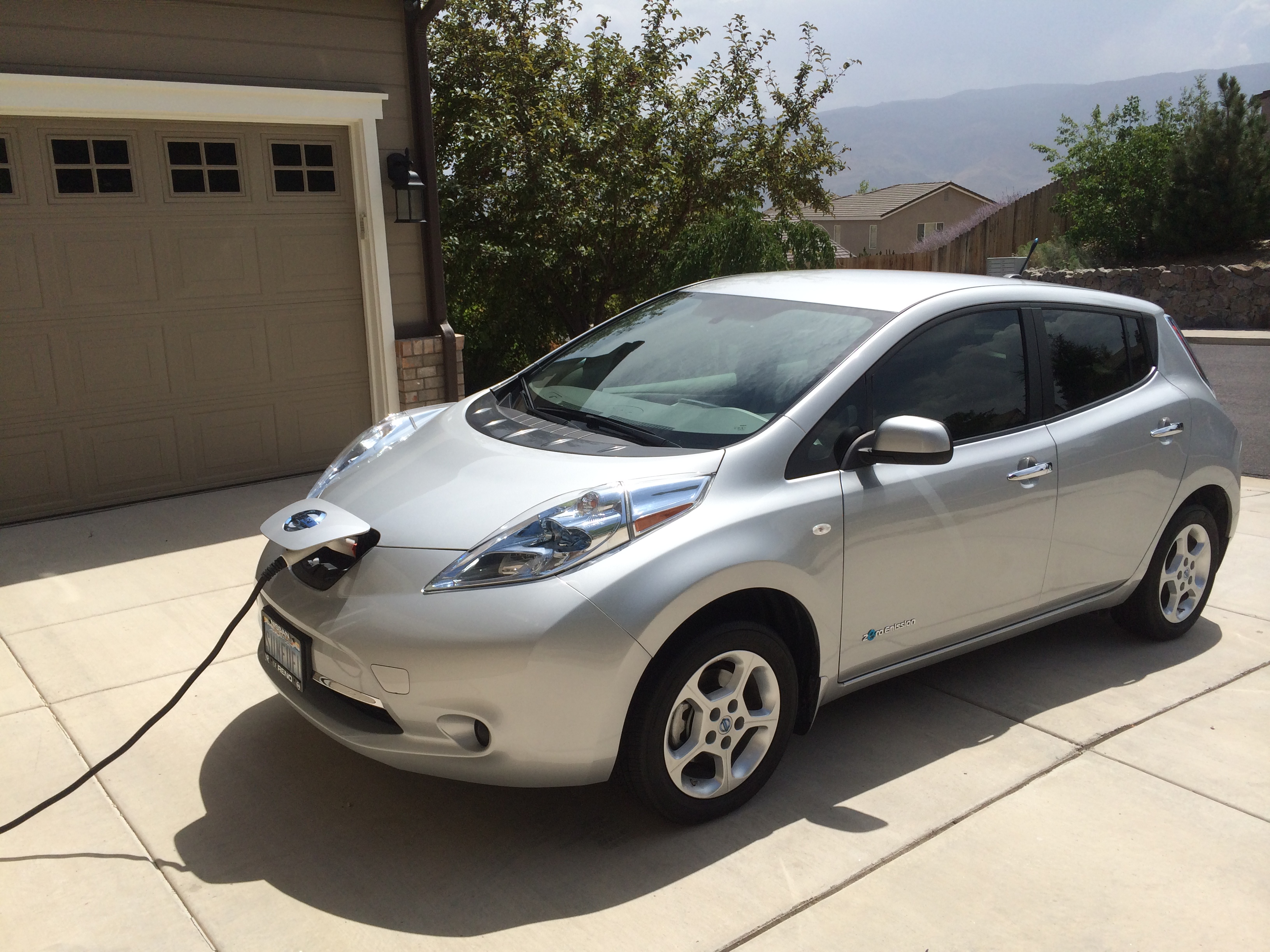
In 2012, we purchased our first electric car (up to 3 now). Our family was really excited about this car. Why?
Just by plugging in vs. filling up, we cut our CO2 emissions roughly in half. Electric cars go roughly 3 miles per kilowatt-hour (the Leaf usually does better but let’s be conservative). The national average CO2 emissions per kilowatt-hour (kWh) is around 1.2 lbs. When you burn a gallon of gas, you produce just under 20 lbs. of CO2. Add refining emissions and you get close to 25 lbs. per gallon. Neither number includes emissions required to transport the fuel to the plant or your tank (call it a wash). Feel free to do your own math if you’d like:
12,000 miles per year:
Electric = 4000 kWh x 1.2 lbs = 4,800 lbs. of CO2
Gas (30MPG) = 400 gal x 25 lbs = 10,000 lbs. of CO2
Since we used the national average electric CO2 emissions number, you can see what would happen if everyone in the US stopped driving a 30MPG gas car and started driving a Nissan Leaf. Just for fun, try a 15MPG truck or large SUV. Then try a 9 MPG Hummer.
Yes, there are other factors that come into play like embedded energy (the amount of energy required to make the vehicle). EVs currently take more energy to manufacture (maybe 20%). The embedded energy typically represents about 10% of the energy a car will consume, cradle to grave. Once you think that over, you should come to the conclusion that it makes sense.
And this gets really exciting because EVs can run on energy from virtually any form – not just oil. They run on hydro, nuclear, fossil, geothermal, solar, wind, biomass or any other energy source that moves electrons on the grid. Since most of the energy on the US electric grid comes FROM the US, this does wonders for our economy (a future blog topic).
But the most exciting part is that EVs can use 100% renewable energy. Converting our fleet of vehicles to a platform that can be 100% renewable is a smart idea.

 Let's Fix This Planet